Drainage issues in a yard can be a huge source of frustration. Whether you are dealing with your plant beds washing out, standing water that makes the lawn unusable, or even more serious problems related to structural damage, you just want your water woes to go away.
Often, landscape drainage solutions can get complicated. For one, it’s not uncommon for these issues to go unnoticed until the problem becomes severe. But failing to diagnose the source of the drainage issues can lead homeowners down the wrong path. On top of all that, you’re also often dealing with HOA compliance issues that need to be met.
For that reason, drainage correction is often best left in the hands of a pro. But understanding what you’re dealing with is still important. We love to help educate homeowners so that they can be well-informed when it comes to making critical decisions.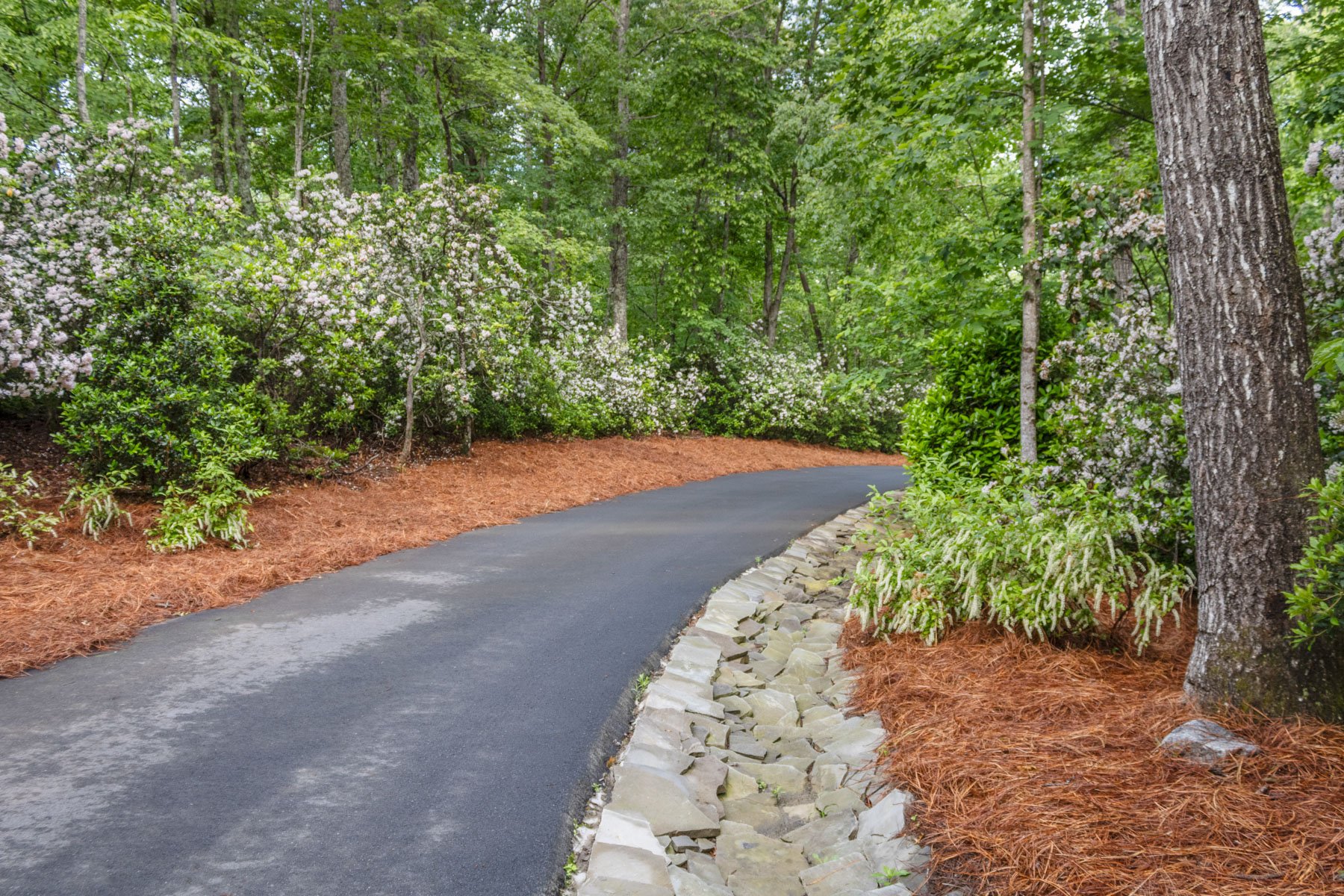
In this article, we’ll cover everything about yard drainage that you need to know in order to be an informed decisionmaker for your Upstate SC property.
Jump To:
What Causes Yard Drainage Issues in Upstate South Carolina?
Common Signs Your Yard Has a Drainage Problem
Why Drainage Problems Shouldn’t Be Ignored
Simple Drainage Improvements Homeowners Can Make
Professional Landscape Drainage Solutions That Actually Work
FAQs About Yard Drainage
When It’s Time to Call a Drainage Professional
What Causes Yard Drainage Issues in Upstate South Carolina?
Landscape drainage can be complicated. There are numerous issues that can lead to trouble with drainage. Here are just some of the potential causes of yard drainage issues in Upstate SC.
-
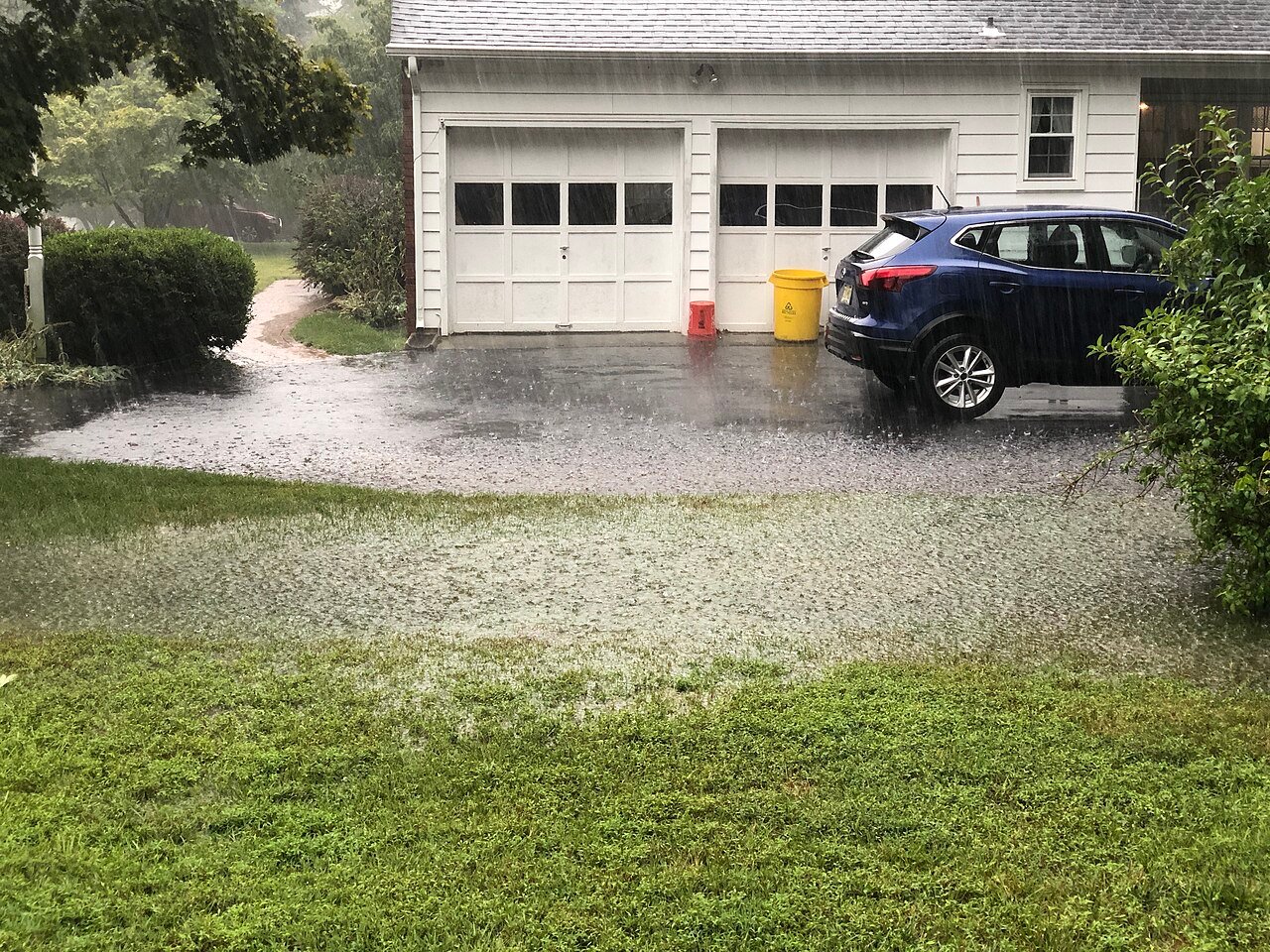
Climate: Less frequent but more intense rainfalls can drive flash flooding that exceeds the historical capacity of previous drainage solutions.
-
Compacted Soil: Our predominantly clay soil can become easily compacted and limit natural drainage, leading to problems with standing water in the yard.
-
Site Geology and Construction: Groundwater often flows along shallow bedrock beneath the surface. When new construction or regrading alters the land, it can redirect that flow—sometimes creating springs, sinkholes, or subtle drainage issues that show up as chronic plant failure. This can start out subtle, making it difficult to diagnose.
-
Engineered Subdivision Swales: Sometimes water is running through your property because it was designed to do just that. This can be complicated in HOA settings where shared swales create visible “rivers” across a backyard by design. Older neighborhoods are increasingly experiencing brief “mini rivers” during intense storms that overwhelm municipal systems. Many first-time homeowners in subdivisions are surprised after the first big rainstorm, seeing that they must actively manage rainwater and drainage on their property (without messing with an existing system).
-
Poor Existing Solutions: Existing landscape drainage solutions might not be cutting it. Corrugated pipe under downspouts can easily clog due to the ribbed-texture of the piping. Shingle grit, leaves, and other debris can become trapped on the ribs. Ideally, only smooth PVC piping should be used to extend downspouts.
-
Irrigation Leaks and Septic Drain Malfunctions: Whether from freeze damage, invasive tree roots, or other issues, irrigation system and septic drain failures can lead to sudden drainage problems in your yard.
Common Signs Your Yard Has a Drainage Problem
You might be surprised to know that drainage woes don’t always show up in obvious ways. Standing water in the yard or runoff are obvious signs of drainage issues in a yard, but they aren’t the only red flags.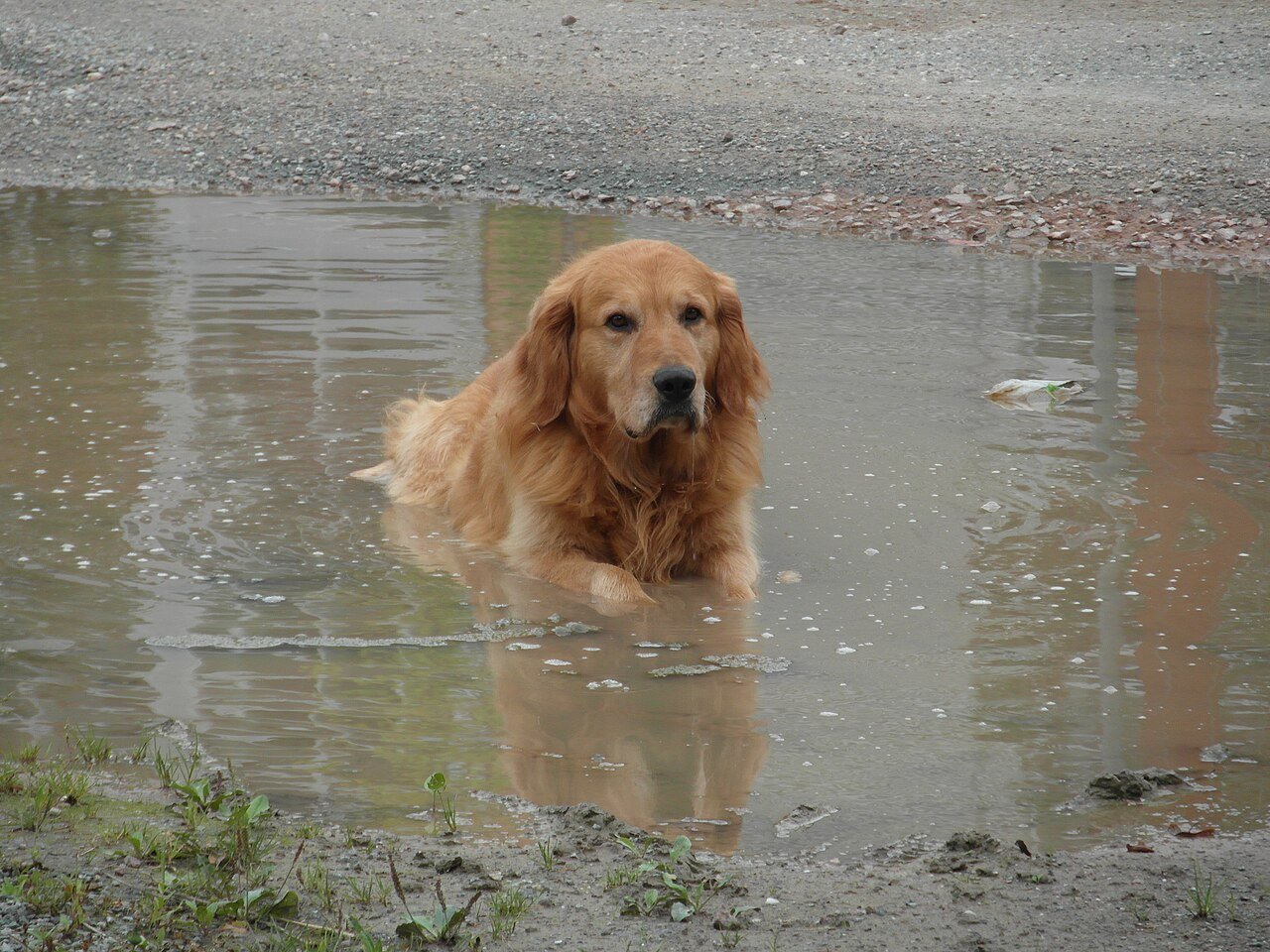
Here are some other signs that your yard has drainage problems.
-
Water that lingers on your property: There’s no doubt that standing water in a yard is obvious. Big puddles that don’t drain are hard to miss. But sometimes it’s also a yard that just stays wet longer than it should. It doesn’t have to mean massive puddles. Excess sogginess or squishy ground are also signs.
-
Erosion or washed-out areas: If you notice mulch has shifted or you have areas that have been washed out by water, this could be due to a drainage problem. Water moving through the yard in areas where you don’t want it to could be the issue.
-
Unexplained plant decline: When the roots of your landscape plants or your lawn become overly saturated, they can actually start to drown. Plants need oxygen for survival which becomes difficult to get when they’re constantly underwater. This can lead to yellowing or overall decline.
-
Algae or slime molds: When algae and slime molds pop up, particularly in shaded areas, this is also a sign that there’s too much water hanging around on your property.
-
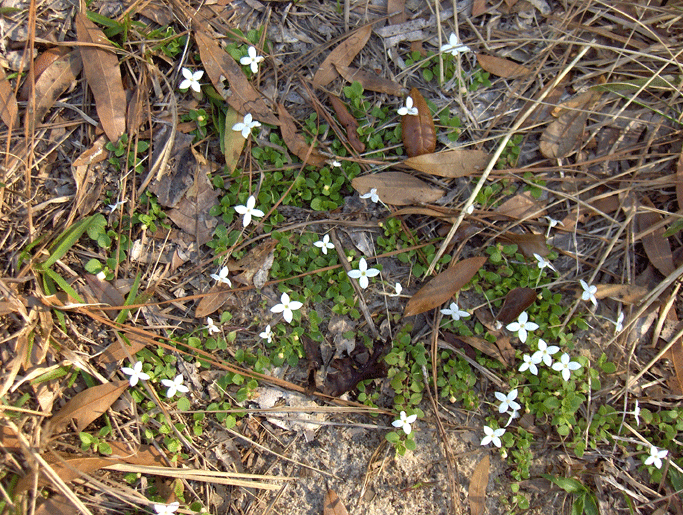
Persistent Sedge and Buttonweed: These weeds can also be an indicator of a drainage issue as they thrive in waterlogged soil (which healthy grass cannot).
Why Drainage Problems Shouldn’t Be Ignored
Drainage issues in the yard should not be ignored because they are likely to compound and potentially lead to damage and future expenses that could have been avoided if yard drainage was addressed earlier on.
Foundational damage can occur if your yard is not properly draining. When water has nowhere to go, the soil can expand, shift, and erode. This can lead to pressure against foundation walls which can eventually cause structural cracking, settling, or even interior flooding.
Your landscape can also suffer over time. Poor drainage deprives lawn and plant roots of oxygen. Lawns thin out, shrubs struggle, and trees may decline slowly over several seasons. By the time it’s obvious, the damage is typically already serious.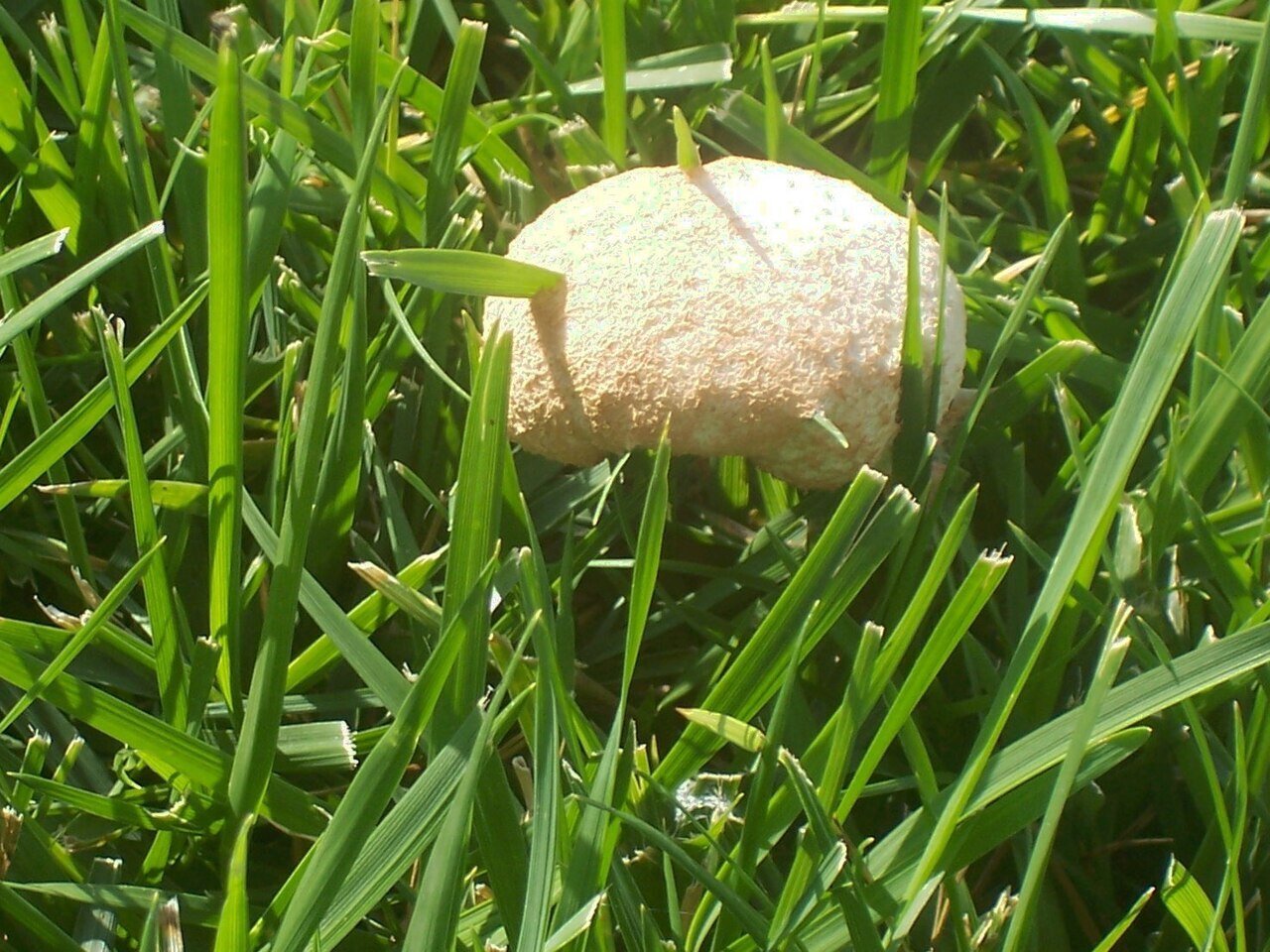
Fungal growth, like slime mold, might also start to develop. This is often an early indicator of a yard drainage issue brewing. Standing water and damp soil can also attract pests.
Plus, all of this can make your yard unusable. It’s simply not worth letting a drainage concern go. It’s not something that is going to get better on its own.
Simple Drainage Improvements Homeowners Can Make
You might be wondering how to fix drainage in your yard…or if it’s even something that you should attempt to tackle on your own.
First and foremost, it’s important to start with diagnostics.
By observing rain events and watching water movement during storms, you should be able to identify how water moves through your yard. Often, debris trails are left behind as water moves through the property.
You can also use a stainless steel soil probe to pull cores of soil from the yard and analyze the appearance. Mud and fermented odors can indicate anaerobic, waterlogged soils that require intervention.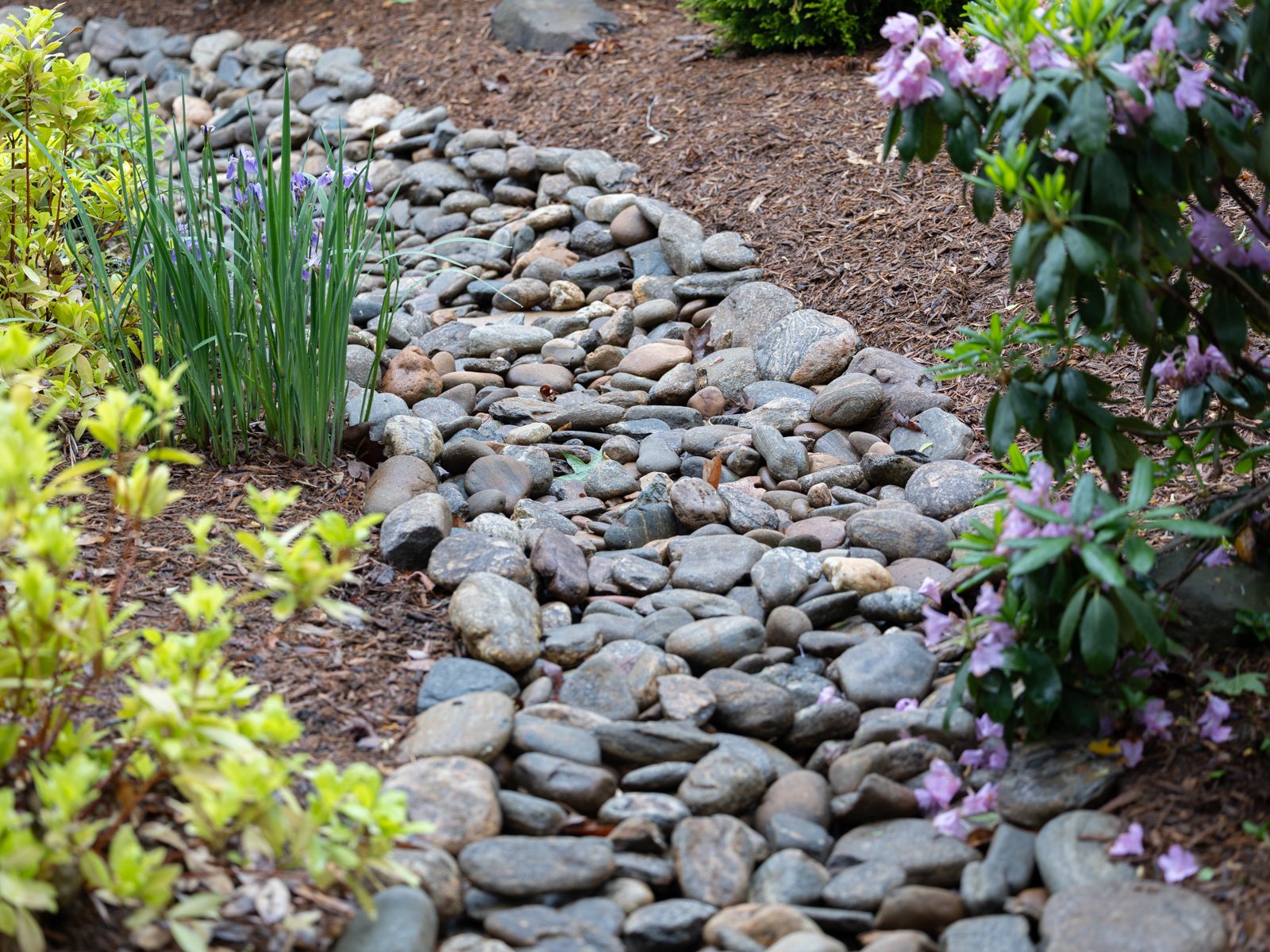
Extending downspouts and implementing basic catch basins are drainage correction solutions that homeowners might be able to do on their own, but their installation can be labor intensive with lots of digging. Keep in mind that a common mistake we see with extended downspouts is the use of corrugated piping. As mentioned previously, this type of piping can easily clog due to the ribbed-texture of the pipe. Various debris and runoff from your roof can become trapped on the ribs. It’s also more likely to be crushed underneath the soil or landscape features. PVC piping, on the other hand, is more structurally sound and has a smooth interior. This type of pipe, with a positive slope away from the house, should be used to extend downspouts.
If you can’t get a quick solution to your drainage woes and you’re concerned about fostering mosquito breeding grounds, mosquito dunks can be deployed in areas of standing water. Mosquito dunks kill mosquito larvae for 30+ days without harming fish, pets, pollinators, or people so they’re a great way to prevent the proliferation of mosquito breeding grounds.
While simple drainage correction solutions can be tackled as DIY projects, full system drainage solutions can be much more complicated and the installation can be quite technical. These types of projects are best left in the hands of a drainage professional.
Professional Landscape Drainage Solutions That Actually Work
There are a number of drainage correction solutions that can help solve landscape drainage problems. The solution that is right for your property is going to depend on a number of variables including things like HOA compliance and what issues are happening in the first place.
Here are a few landscape drainage solutions that can be implemented.
-
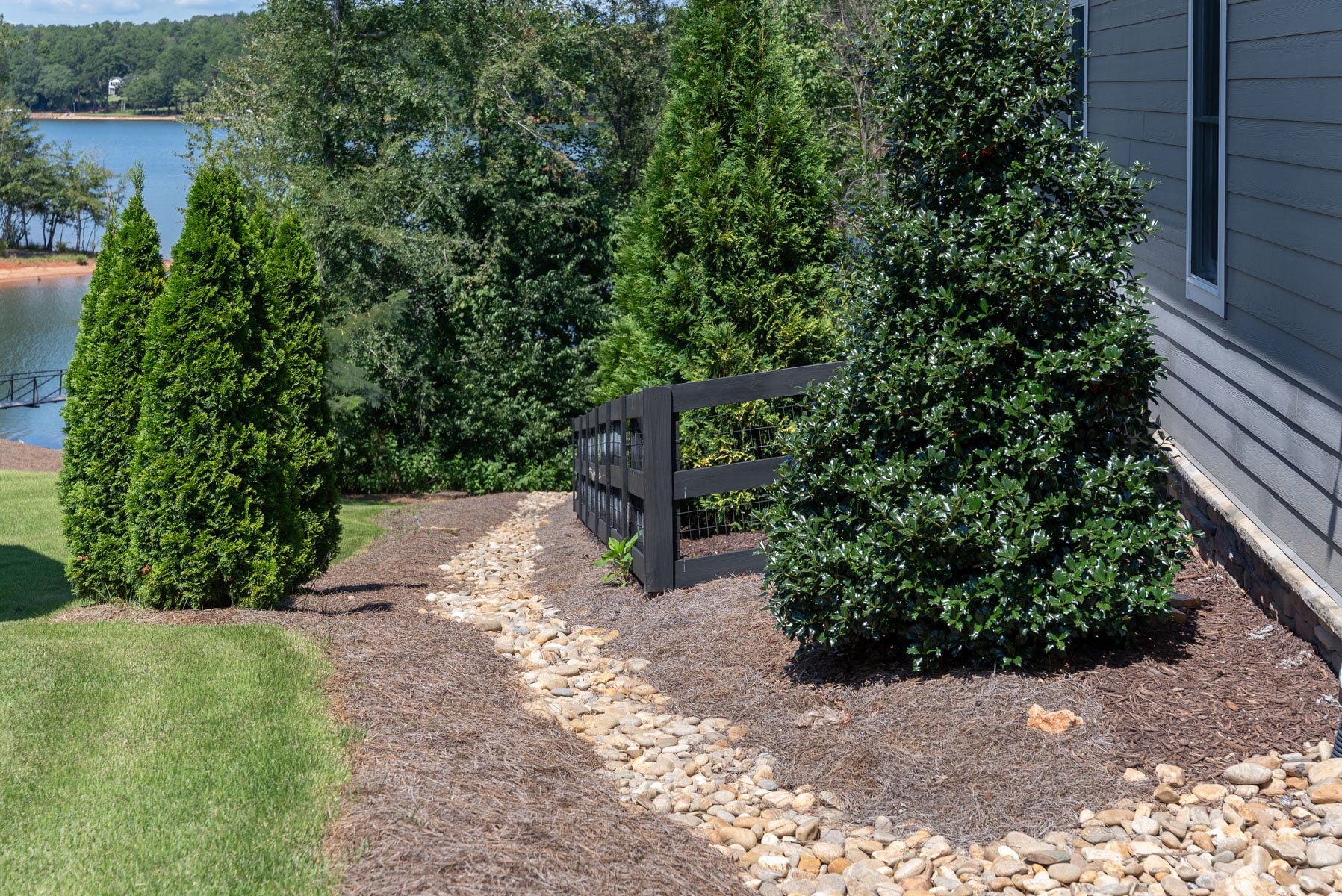
“Collect-and-Cast” solutions: These include drainage solutions like French drains, catch basins, pop-up emitters, and extended downspouts. These are solutions that involve capturing runoff and diverting or redirecting it where you want it to end up. Discharge points must be compliant with any HOA ordinances, so solutions need to be tailored to the specific site. Regulations around these solutions can make it complicated.
-
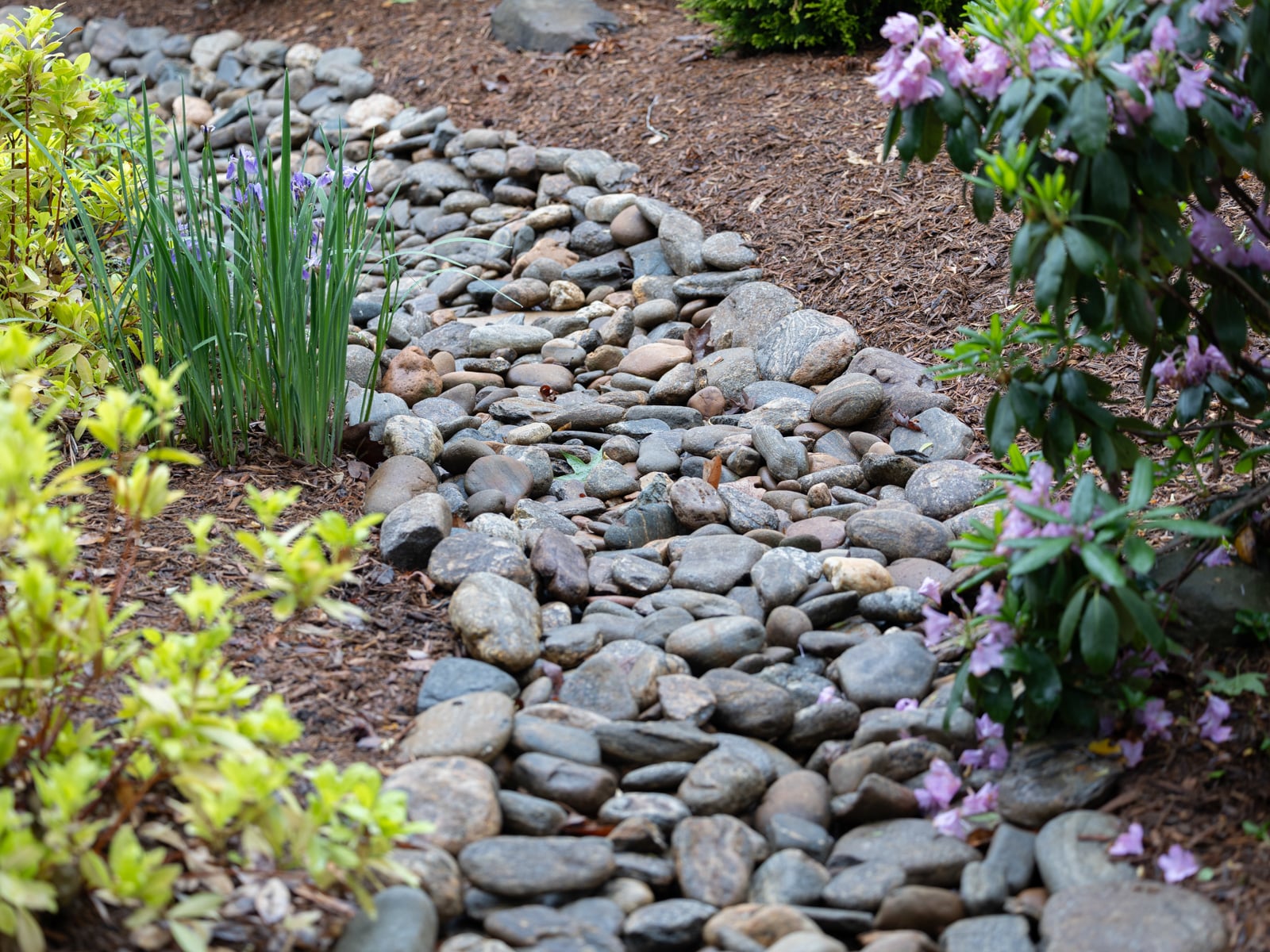
Infiltration solutions: This type of yard drainage solution include surface-level options like swales and micro-swales, which help to collect runoff, slow it down, and help it infiltrate without overwhelming the ground. For instance, this might involve dry creeks or deep rock edges between turf areas and plant beds to channel water, reduce wash-outs, and limit oversaturation.
-
Level spreaders: This is an emerging drainage solution that can have long-term benefits. This solution allows water to slow down and spread out, instead of allowing it to rush through just one spot. A level spreader takes fast-moving water from a pipe, slows it down in a flat, rock-filled trench, and then lets it spill out gently and evenly over grass so it can soak into the ground without causing erosion. In drought conditions, retaining and evenly dispersing rainfall on-site via level spreaders can balance flood mitigation with moisture conservation, avoiding hyper-efficient ejection that can be counterproductive.
FAQs About Yard Drainage
Before we wrap up this article, let’s recap some important information and answer commonly asked questions.
What causes drainage problems in a yard?
There are a number of factors that can cause yard drainage issues including climate, compacted soil, site geology, poor existing solutions, and broken site infrastructure.
How can I tell if my yard has a drainage issue?
Some of the red flags that your yard has drainage issues include standing water, evidence of erosion, unexplained plant decline, algae and slime molds.
What are the best drainage solutions for residential properties?
There is no one-size-fits-all approach to yard drainage correction. The solution that is going to work best for your property will depend on numerous factors including what’s causing your drainage issue in the first place. Some potential solutions include French drains, swales, and catch basins,
When It’s Time to Call a Drainage Professional
If you’re dealing with any sort of yard drainage issue, then you might be considering calling a professional. The truth is, these problems can be more complex than they might seem on the surface, and having a pro apply their expertise can remove the guesswork.
Similarly, if you’re having any sort of landscaping completed, it’s important to choose landscape design and installation in Greenville and Upstate SC that has experience with landscape drainage solutions. The last thing that you want is for a new landscaping addition to create a drainage issue.
It’s critical that drainage is taken into account for any design-build work you’re having done.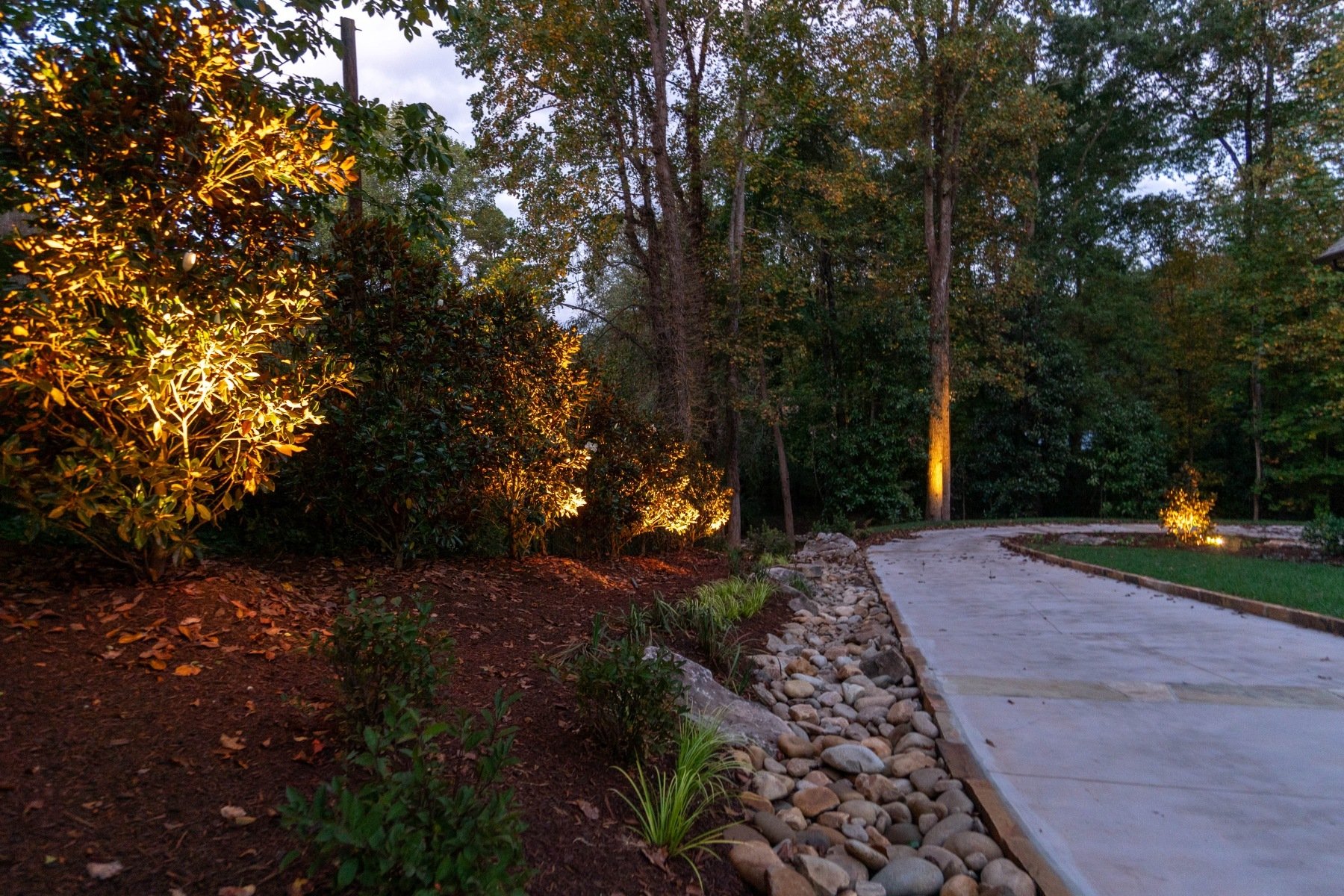
At Precision Landscape, homeowners choose us because we are reliable, responsible, and do things the right way. We also have the expertise needed to tackle complex problems and introduce viable solutions. Whether you have an existing yard drainage issue or you’re just looking for a landscape solution that takes drainage into account, we’re here to help.
Ready to get started? Fill out our consultation form today and let's start planning your dream landscape.
Image Sources: flooding yard, dog in puddle, buttonweed, slime mold